
|
| Parks and Playgrounds |
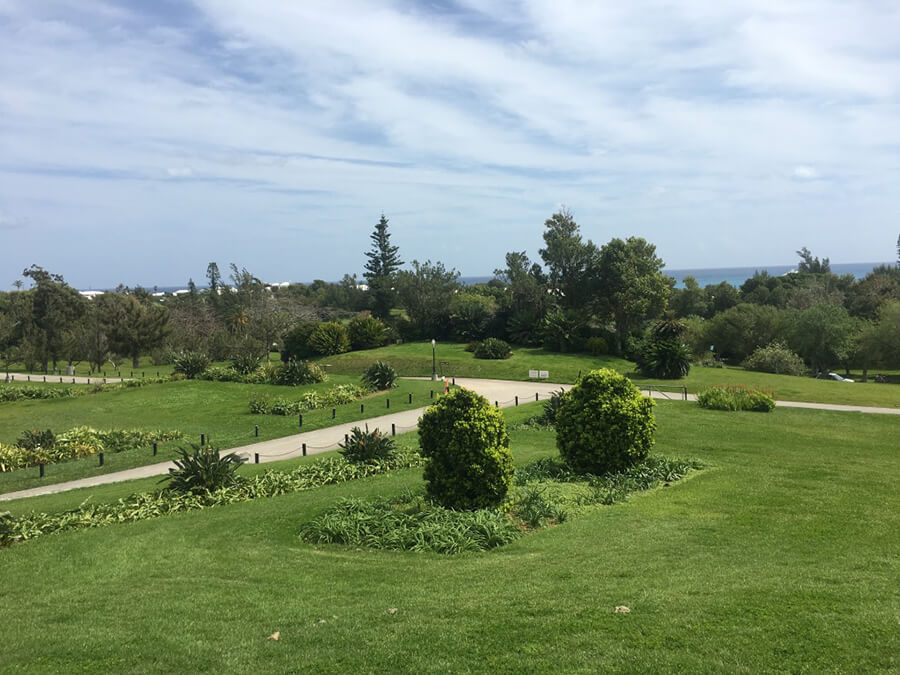
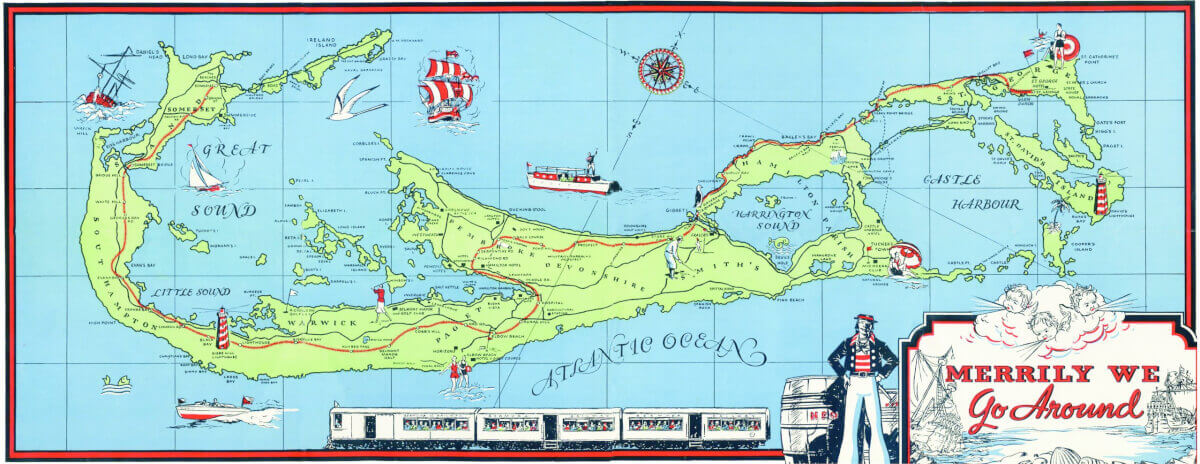
Bermuda has a number of parks spread across the island with the Railway Trail being the largest running from St. George's to Somerset. The Railway Trail is used by locals and visitors for walking and cycling. Every May a major event, the Bermuda End to End, is held utilising the Trail as a community fundraiser for local charities. Development of the Trail and Parks system is ongoing. There are walking and cycling tours available or you can do it yourself! A fabulous guide book for the backroads of Bermuda is 'Hiking Bermuda' by Cecile and Stephen Davidson.
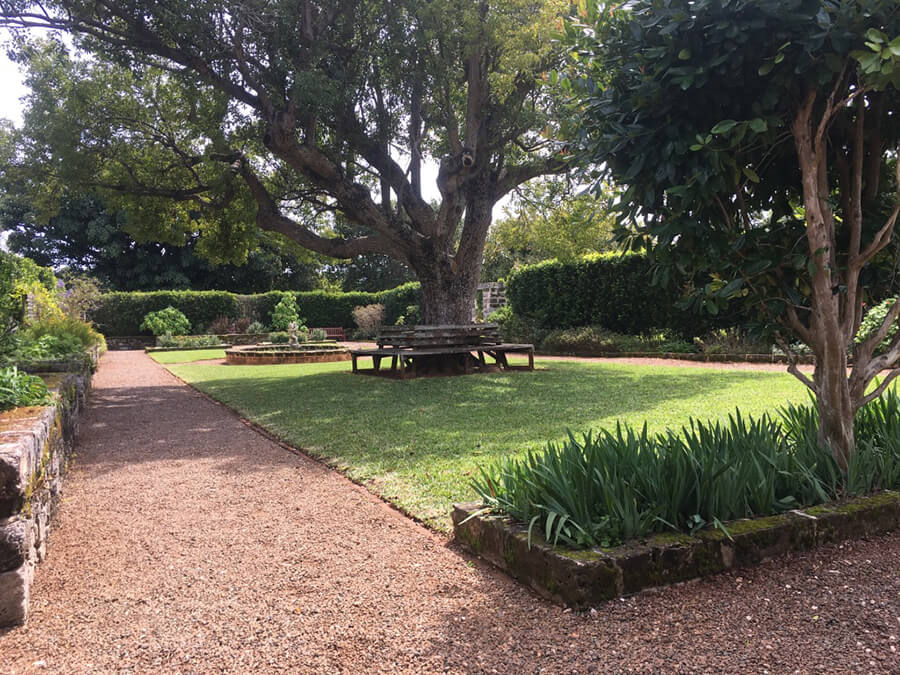
The Bermuda National Trust preserves and enhances many parks and nature reserves on the island. They also provide tours each Wednesday at its "Waterville" headquarters, with exquisite grounds as they were in the 19th century and The Rose Society’s Repository Garden showcases a national collection of old roses. The tour includes the Paget Marsh, the only surviving marsh in its pre-colonial state with ferns, mangroves, wading
and migratory birds.
|
|
|
Astwood Cove & Park
|
 |
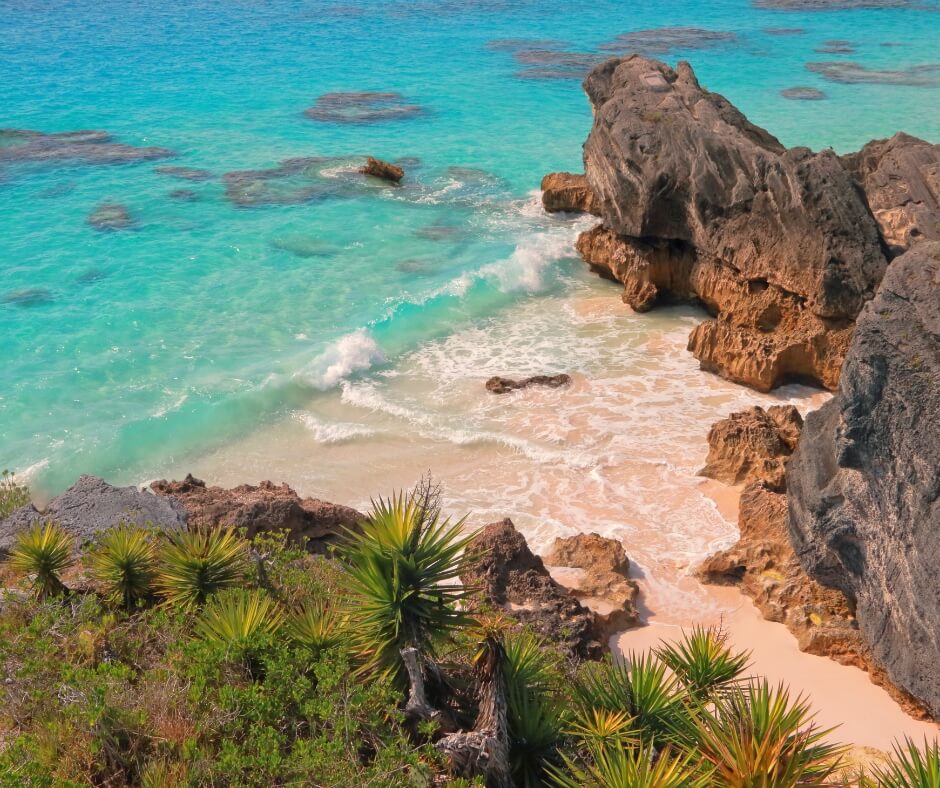
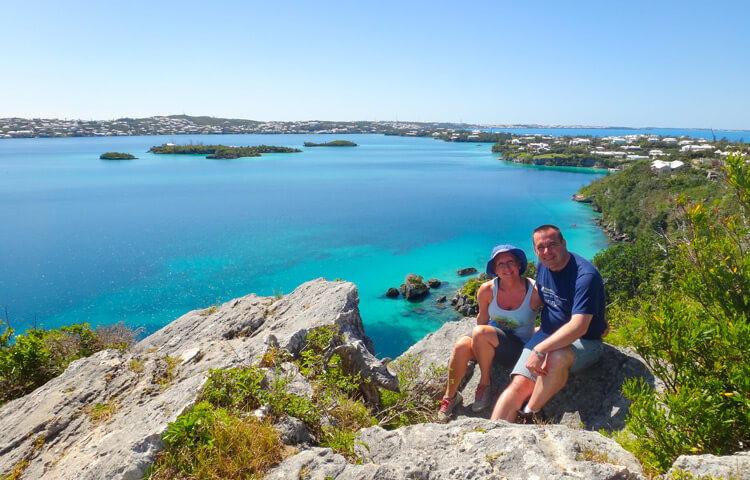
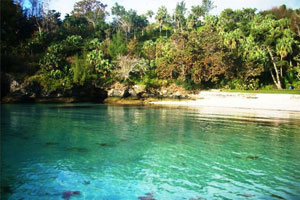
More famous for being a site of romantic island weddings than swimming, nevertheless this cove is a delight to experienced swimmers. Its rocky shore line and strong waters are not for amateur swimmers. For observers there’s a magnificent park maintained by Bermuda’s Parks department ideal for picnics and nature walks. It is also a photographers dream and understandably why a popular wedding vista. |
|
| Barr's Bay Park |
 |
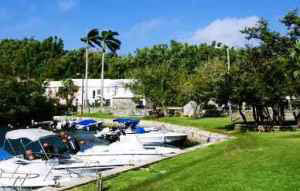
Barr's Bay Park is right on the Hamilton Harbour next to the Royal Bermuda Yacht Club along Pitts Bay Road. It is a fabulous place for a picnic lunch and to watch the boats go by. Named for a Bermudian family dating back to 1727. The park is wheelchair accessible and often used for outdoor events in Bermuda, such as the Bermuda Boat Parade and the Bermuda Big Game Classic. |
|
| Bermuda Railway Trail |
 |
A 22-mile railway served Bermuda from 1931-1948. Even in 1920 Bermudians were horse-drawn carriages, bicycles, boats and feet for transportation. And with tourism on the rise, the decision to build a railway was made. It took eight years with 33 bridges and trestles. It opened October 31, 1931 with regualr service from Hamilton to Somerset. It was until December that the Railway serviced Hamilton to St. George's. There is a guide to the Railway Trail available at all Visitor Service Bureau locations. There are also two recommeded books: 'The Bermuda Railway. Gone but not Forgotten' by Colin Pomeroy; 'Rattle and Shake: The Story of the Bermuda Railway' by David Raine.  |
|
| Blue Hole Park |
 |
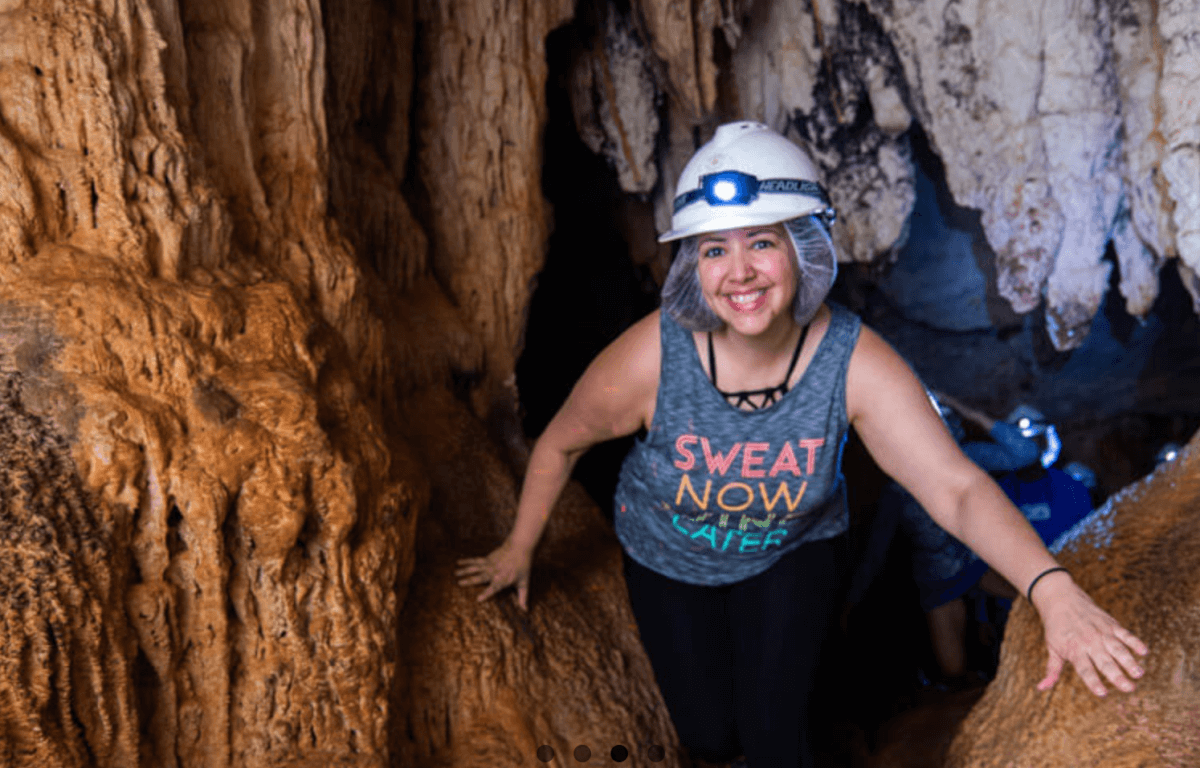
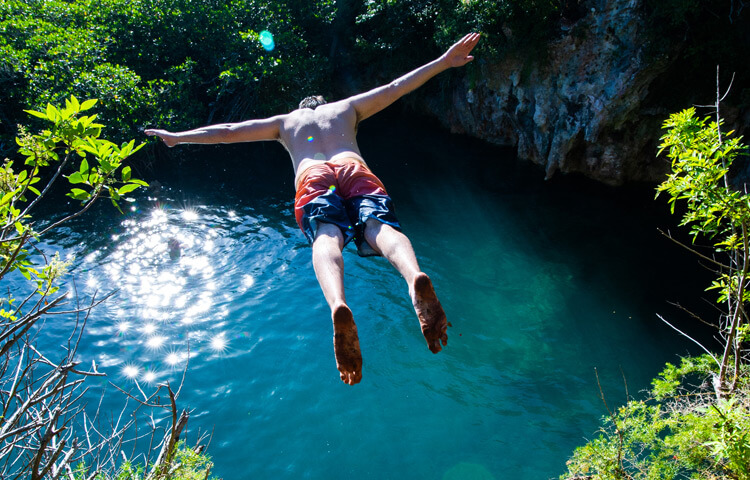
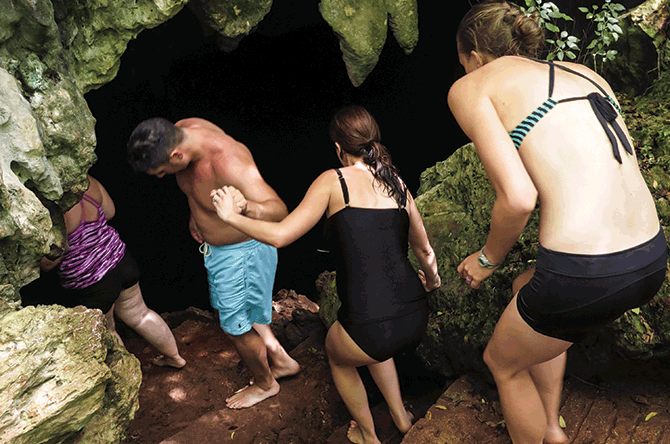
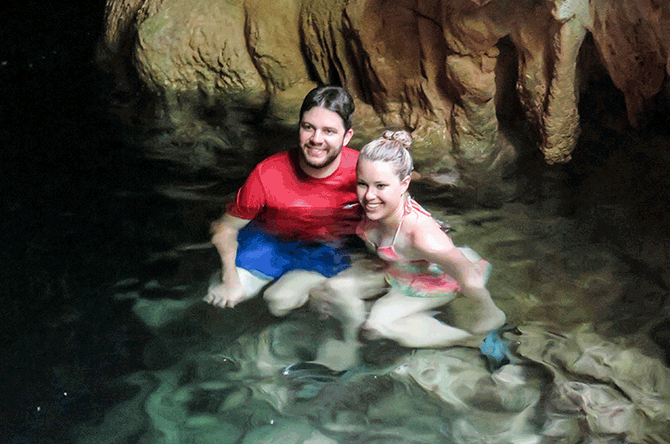
This 12-acre nature reserve is located just opposite of Grotto Bay Beach Resort with parking and restrooms. There is a well groomed trail featuring wetland habitat, an observation post for bird watching and the fairytale setting of the Blue Grotto. Stand on the wooden platform and lose yourself staring into the deep blue waters that fill this sunken cave. There is also a limestone cavern hidden among the vegetation. |
|
| Clearwater Beach & Park |
 |
Clearwater Beach and Park off of St. David’s Island is actually two man-made beaches created when the airport land was reclaimed around 1946 as a US military base and joined to smaller islands. It has been a public recreation area since 1996 with playground, beaches, hardscape for cycling, rollerblading and other activities. Many Bermudians enjoy this area, as it is a great location for a church picnic, company party or music festivals. There is ample parking and during the summer months a lifeguard is on duty.
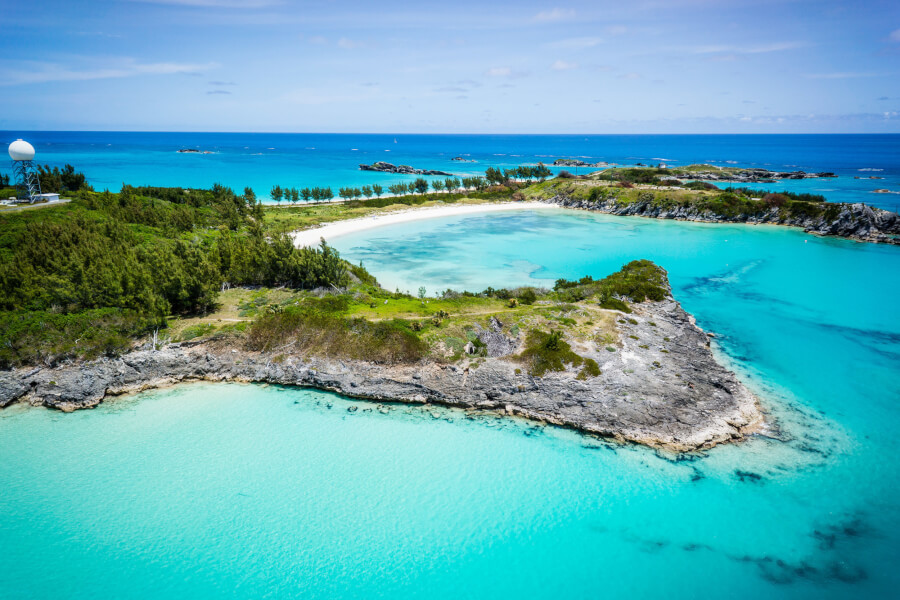
Stretches of turtle grass create dark patches offshore and at the same time provide a feeding station for turtles and fish. Overhead, one may observe arriving and departing aircraft from the adjacent Bermuda International Airport which, by the way does nothing to disturb the tranquility of the area.
|
|
| Paget Marsh & Nature Reserve |
 |
This is the last surviving endemic Bermuda Palmetto and Cedar forest. The 25-acre nature reserve is owned and maintained by the Bermuda National Trust and Bermuda Audubon Society. There is a boardwalk that spans the area bringing the wetland habitat and mangrove ponds closer without getting wet! Bird Watching is fantastic with many migratory species passing through. Open dawn to dusk.  |
|
| Palm Grove Garden In Devonshire |
 |
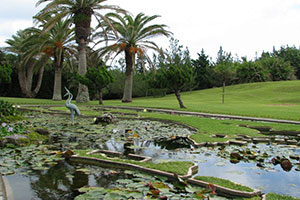
This unique private garden has a spectucular Bermuda-shaped reflecting pool, along with exotic parrots, topical plants and a beautiful view of the ocean on the south shore. It is located east of Ariel Sands in Devonshire and open to the public Monday - Thursday from 9am - 5pm. |
|
| Par-La-Ville Park |
 |
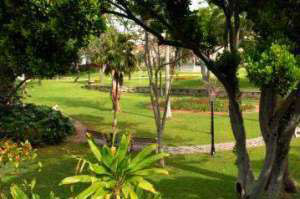
This centrally located park is a favorite of locals during lunch to escape to nature if only for an hour! There are two entrances to the park – Par-La-Ville Road where the oldest Moongate stands, or on Queen Street next to Perot’s Post Office of the first postmaster in Bermuda. His house is now the Bermuda public library and the Bermuda Historical Society Museum.
On February 2, 2007 “Jete”, a life-size bronze of international ballet star David Wall by Italian sculptor Enzo Plazzotta, was installed in Par-La-Ville Park. Part of the recent bequest to the Bermuda National Gallery by John Hinson Young II and Nelga Young, it depicts the dancer David Wall, former Principal dancer with the Royal Ballet and now Principal Repetiteur with English National Ballet, in a leap known as a jeté. It is the second from the Young Collection to be placed in the park, following the installation of American sculptor Berthold Schiwetz’s bronze Preying Mantis Fountain last year. Together they form the basis of Bermuda’s first Sculpture Park, a joint project between the Bermuda National Gallery (BNG) and the Corporation of Hamilton that will eventually form part of a city-wide Public Sculpture Trail.
|
|
| Spittal Pond |
 |
Spittal Pond is a 64-acre nature reserve owned by the Bermuda National Trust and the Bermuda Government’s Department of Agriculture. This wetland habitat is Bermuda’s largest bird sanctuary and a variety of native and endemic plants, as well as unique historic and geological value. Open dawn to dusk.  |
|
| Victoria Park |
 |
Situated behind the City Hall & Arts Centre, the most notable feature of this small city centre park is its band stand. Erected in the late 19th century to commemorate the golden jubilee of Queen Victoria, it’s now the setting for free Sunday evening summer concerts, Concerts in the Park, sponsored by the Bank of Butterfield and the Corporation of Hamilton from 6 – 9pm. Each themed concert features around five local and international artists. Bring a picnic of food and wine to enjoy during the performance. There are public restrooms. |
|
| Warwick Pond |
 |
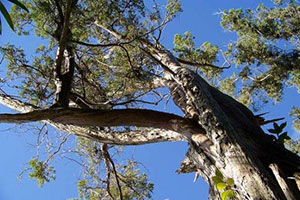
Warwick Pond borders on the Warwick portion of the Railway Trail and is the second largest freshwater nature reserve, a 9-acre haven for resident and migratory waterfowl. There are a number of endemic Bermuda cedars and lots of Allspice trees, named for the pungent scent of the leaf. The Bermuda National Trust recently installed an interpretive sign nature trail around the pond. Open dawn to dusk.  |
|